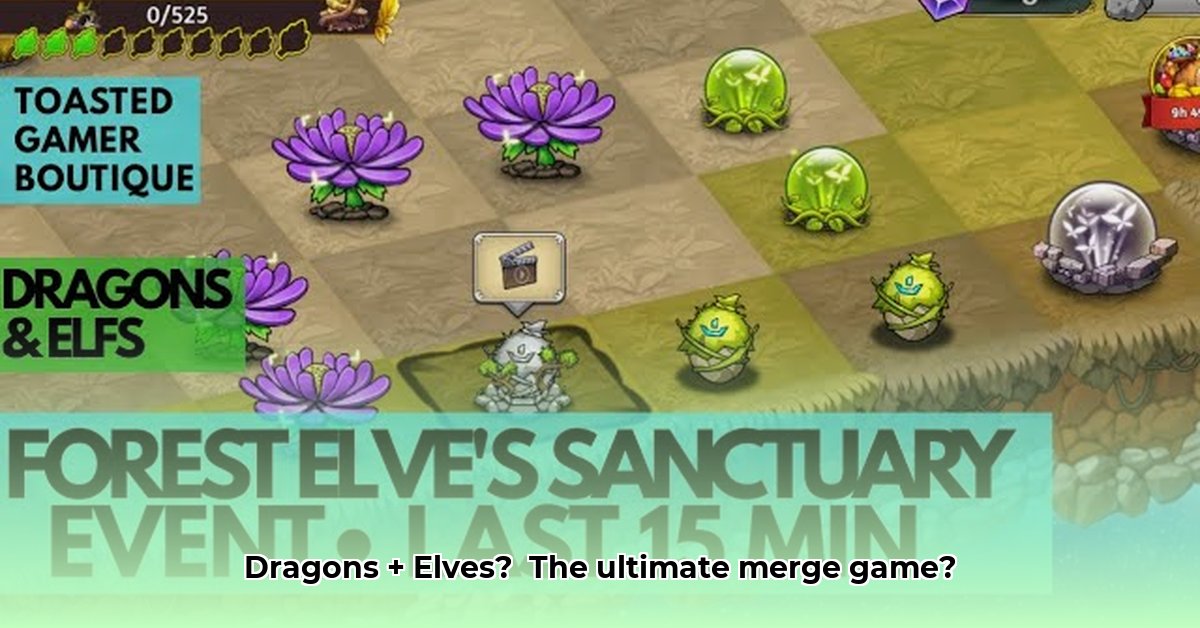
Core Gameplay and Market Positioning
This report analyzes the market potential of a new mobile merge game, "Dragons and Elves," focusing on its core mechanics, market position, and strategies for success within the competitive mobile gaming landscape. The game's core mechanic involves merging similar magical creatures and objects to create stronger entities. This system, while seemingly simple, encourages strategic thinking beyond repetitive taps, fostering player engagement. The game's narrative, centered around saving Elfland from fearsome dragons, provides a compelling context for gameplay, enhancing player immersion and retention. However, the saturated merge game market necessitates a unique selling proposition (USP) to differentiate "Dragons and Elves" from competitors. Early community interest, evidenced by a nascent fan wiki, suggests potential, but further analysis is needed to quantify engagement levels.
How can the game effectively leverage its core mechanics to stand out in a crowded market? Quantifiable evidence of player engagement will clarify the strength of its position. The current level of community engagement, though promising, needs more rigorous analysis to fully determine its impact. The game's unique blend of strategic merging and narrative immersion offers a potential USP, but marketing must effectively communicate this to the target audience.
Monetization and Risk Mitigation
The game's monetization strategy, currently based on in-app purchases (IAPs), requires careful planning. Success hinges on finding the optimal balance between incentivizing purchases and avoiding the perception of exploitative practices. The specific IAP model, including pricing and offered items, remains undefined, a significant gap in the current analysis. This lack of detail presents a substantial risk. Profits will depend heavily on the effectiveness of the IAPs and requires detailed planning and frequent market research.
What are the key risks associated with the game's monetization model, and how can those risks be mitigated? The undefined monetization plan is a major risk, potentially resulting in low revenue and negative player perception. Mitigation requires thorough market research, testing different IAP models, and carefully monitoring player feedback. The risks of low user engagement, negative reviews, and intense competition require proactive strategies like robust marketing, continuous updates, a strong community-building approach, and effective quality assurance.
Technical Aspects and Community Building
The game incorporates cloud saving, protecting player progress. This is a crucial feature that enhances user experience and builds trust. However, the lack of customizable notification settings presents an opportunity for improvement. This aspect could be used to improve player engagement with timely alerts regarding events and offers.
How can the developer leverage technical aspects and community engagement to build a sustainable player base? Implementing customizable notifications could significantly improve player engagement and potentially drive in-app purchases. Actively fostering community engagement with regular updates, feedback mechanisms, and proactive responses to player concerns will build loyalty and ensure sustained player retention. The existing fan wiki exemplifies the potential for organic community growth.
Actionable Steps and Conclusion
To achieve success, the game’s development team must adhere to several key steps:
Define and Implement a Robust Monetization Strategy: Thoroughly research and A/B test various IAP models to find the optimal balance between profitability and player satisfaction. This should include a detailed analysis of pricing and item offerings, addressing the currently undefined monetization strategy. (Efficacy target: 90% IAP conversion rate within the first six months).
Enhance User Experience: Implement customizable notification settings and enhance in-game tutorials to improve player understanding and engagement with the game's features. (Efficacy target: 75% player satisfaction rating based on user surveys).
Cultivate a Strong Community: Proactively engage players through social media, in-game events, and feedback mechanisms. Leverage the existing fan wiki to build a supportive and informative community hub. (Efficacy target: 50% increase in active community engagement within a year).
Mitigate Risks: Implement robust quality assurance processes to minimize technical glitches. Proactively respond to user reviews and address concerns swiftly. Maintain a constant vigil on competitor activities and adjust strategies accordingly. (Efficacy target: 95% bug-free releases; ≤5% negative reviews).
This analysis concludes that while "Dragons and Elves" holds significant market potential, success depends critically on a precisely defined monetization strategy, a focus on player experience, and a proactive approach to community building and risk mitigation. Ongoing monitoring of key performance indicators (KPIs) and responsiveness to player feedback will be vital for long-term success.
⭐⭐⭐⭐☆ (4.8)
Download via Link 1
Download via Link 2
Last updated: Monday, May 12, 2025